If the act of web surfing might keep dementia at bay, then blogging might just allow your brain to outlive your body.
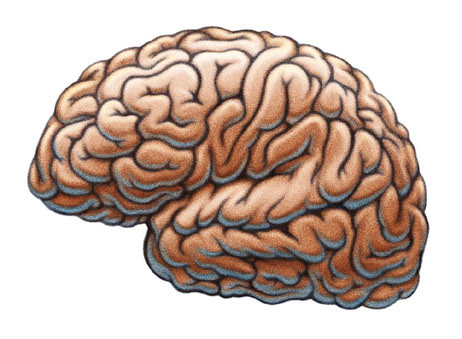
The Context
I found this brief, but intriguing article from MSNBC interesting enough to engage a read-aloud with my Dual-Credit Biology class this past week. This classroom of curious minds is full of nascent bloggers. We have begun our journey into the blogosphere within the relatively safe confines (if the global web can be seen as “confined” in any way) of a classroom network on the Ning platform. Here we have recently dabbled with online discussion forums, mini-project publishing and blogging as it relates to the dynamic nature of science in general.
One must also be aware that these forms of learning are quite novel at my school of around 900 students in Saint Joseph, Missouri. I, along with a small cohort of teachers at Benton High, have taken a step into the world of online interactivity and publishing within the standard curriculum of our courses. After just a month and a half, we have realized the fact that the doors of our classrooms no longer lock tight at 3:00pm. During even late nights throughout the week, many of our classrooms are still abuzz with content discourse while the mice come out to frolic in the hallways of our aging school.
I have to say, my students have bought in. I have tried to deeply embed the daily work we do in class with the digital tendrils that run throughout the global web. It is fun to think of these conversations happening invisibly about our heads as radio signals. For years I have peppered my classroom mission with this ideal, but this year I have taken a full windward tack toward digital conversation. The experimental nature of it all tends to dovetail well into the two science classes I teach (Dual-Credit Biology and Marine Biology). Students seem to come to these classes fully prepared to confront ideas and phenomena they have yet encountered. I have never taken that mindset lightly in what I do on a day-to-day basis.
The Article
So it is within this framework that a little article like this can get some serious play. The suggestion that web surfing itself could prolong the cranial excitement that leads to long brain life is powerful. The main detail that stuck out to me is the fact that fMRI scans of subjects surfing the web were more diverse than a control group who were merely reading books. In this study, the book-reading participants showed significant brain activity in the temporal, parietal and occipital lobes of the brain. As the article states, these regions are involved in controlling language, reading, memory and visual abilities. This surely comes as no surprise to any reading expert as many of our current comprehension strategies are designed to take advantage of this.
However, the brains of those participants who were web surfing showed the same activity. What is more is the fact that they also excited the frontal, temporal and cingulate areas of their noggins. These areas of the brain control decision-making and complex reasoning. More still is the fact that this effect was only noted in those subjects who had prior Internet experience.
“Our most striking finding was that Internet searching appears to engage a greater extent of neural circuitry that is not activated during reading.”
If ever there was a solid suggestion that a non-webbite should get on the Internet… and now… this could be it. The fact that a discussion of these ideas can take place for fifteen minutes in the lives of open-minded teenagers is pretty stimulating. To know that what you do now can effect the neural wiring of your future brain is pretty compelling.

Going Beyond
If mere web surfing can be such rich exercise for gray matter, then the act of blogging just might build the kind of active brains we strive for in education- for blogging, is not your garden variety writing exercise. My first experiences with blogging last March were personally empowering for many reasons. Not the least of which was the fact that I soon felt like I was engaging in a type of writing that went way beyond anything I had done to date.
After authoring a few trial pieces to see what the phenomenon was all about, it occurred to me that I was engaged in far more than I had ever been while solely journaling. I remember talking this out with several of my closest educator friends. I remember making a comment that what I was doing felt like some type of “connective” writing- perhaps even a different genre. Of course, what felt like a shiny new endeavor to me was already a published entity. In fact, in Will Richardson’s 2006 book, Blogs, Wikis, Podcasts and Other Powerful Web Tools for Classrooms, “connective writing” is mentioned as somewhat of a new genre starting on page 30. Finding this little gem made me feel a little less of an explorer, but was certainly validating.
Richardson describes this type of writing as being, “a form that forces those who do it to read carefully and critically, that demands clarity and cogency in its construction, that is done for a wide audience, and that links to the sources of the ideas expressed.” He goes on to drive home the point that good blogging requires far more critical reading than might be immediately noticed by the casual reader of a blog. There is far more rich goodness in this chapter than can be related in this post, and I highly recommend the book to anyone looking to engage students in the pedagogy of blogging.
Bottom Line
Academic blogging is rigorous synthesis. It is an activity than can certainly enhance your classroom, and potentially extend the life of your brain. As I finish up this post, my wife @erinlynnnash just chimed onto the Twitterverse with a somewhat-related line from a Flobots song: “There is a war going on for your mind. If you are thinking, you are winning.”
Perhaps this is a better mission statement for our school than the one we last authored.
Artwork thanks:
Mao, Isaac. “Brain.” Flickr. 13 June 2005. 18 Oct 2008 <http://flickr.com/photos/isaacmao/19245594/>.
“tmcnamee”, “Old World Brain.” Flickr. 03 APR 2007. 18 Oct 2008 <http://flickr.com/photos/mcnamee/445793409/>.

Hey…thanks for the kind words about my book. Glad it resonated and affirmed your thinking. That really is an illustration of what I was talking about, the idea that we can connect our ideas in this way and clarify our own thinking by reading and writing around what others share. It is a fun learning world these days.
Best,
Will
“Academic blogging is rigorous synthesis. It is an activity than can certainly enhance your classroom, and potentially extend the life of your brain.”
Amen! I agree wholeheartedly, but to see this in black and white makes me even more frustrated with colleagues district-wide at multiple levels who balk at even dabbling in this relatively new technology. If we can’t get our academic counterparts to dip their toes in the water, how can we expect our students to understand the value of putting their thinking out there for others to respond to, add to, question, or even challenge? One of the things I appreciate most about putting my thoughts in this little white box is that someone might listen to what I have to say here and respond in such a way that gets me to think even more deeply!
True, we can benefit from self-reflection through paper-and-pencil journaling, a valuable tool that some of our colleagues use, but that is a one-way conversation and only goes so far toward our personal and professional growth. If only we could get all to see the value in inviting others into the conversation in an effort to help us grow. In fact, isn’t that more or les what we are trying to do when we wander among our students in a constructivist classroom responding to their thinking, challenging them to look further to find even more, and asking questions aimed at causing them to think more deeply or even take their thinking in a new direction?
blogging is nothing in and of itself.
this is the same for any academic tool or strategy.
example: writing “marzano” on your lesson plan sheet does not = student achievement.
there is more to what we do than that.
blogging is a tool. a rather engaging tool for many kids of 2008, but just a tool nonetheless.
blogging fuels reflection, but it is not restricted to reflection.
it is but one piece of the performance puzzle possible with this tool.
blogging is about writing to a wide audience… with a goal to accomplish.
…and therefore, blogging is problem-based learning. (if it is so constructed with that goal in mind)
blogging is potentially a very powerful and versatile undertaking for people of all ages.
blogging is more than just typing. i can type with my brain shut off, whereas blogging
is one of the single most rigorous professional and personal things i have done in a very long time.
to quote David Warlick on the subject: “it’s not about technology. it’s not about grammar. it’s about information, and using information to accomplish our goals.”
sorry if the mindstream there was disconcerting for anyone.
😉
Great post, Sean. Thank you!
OK-so where do we go from here?????? Benton is lucky…What about the rest of us?
I’m lucky….I’ve got my own personal tutor 🙂 (OK -maybe not my own personal tutor, you’ve taken a lot of time to help me one on one!)
I would like to see our district really get behind this and offer classes to teach us and help us become proficient.
I think you are right, Jennifer. The true secret to solving any large-scale education problem is innovative PD. Teachers need the same support we expect them to deliver for our children. When I say “same,” I do not mean equal in time, scale, or delivery.
However, the same attention needs to be paid to the professional in the room who has not had the luxury and comfort of growing up digital.
Okay, this was an amazing blog post. I would say this was the best 10/10 I have ever read from this area. I was really intrigued with your connection to Jeff’s article. I mentioned this to my mom last week, and she said she even noticed a difference in her own “connectivity.” Now I know that is not the connective writing you were discussing, but the way she was describing it very much put it in that context.